







Airway Development
Growth & Development: Early Evaluation of Jaws and Airways
Scroll
Airway Development
The years when growth can be assessed and guided
The way a child’s jaws and airway develop can influence how they breathe, sleep, and smile. During childhood, the bones of the face are still developing. This means there are years when growth can be assessed and, when appropriate, guided. At Lansdowne Dental Care, Dr. Tracey Nguyen evaluates growth early, so we can support development during the years when it matters most, with gentle, age-appropriate care.
Airway Development
Signs your child may benefit from an evaluation
Children rarely complain about their airway or jaw growth, so parents are often the first to notice the signs. Watch for:
- Snoring, noisy breathing or pauses in breathing during sleep
- Mouth breathing during the day or at night
- Restless sleep, frequent waking or unusual sleeping positions
- Bedwetting beyond the usual age
- Daytime tiredness, irritability or trouble focusing
- Teeth grinding at night
- Crowded or crooked teeth, or not enough room for adult teeth
- A narrow upper jaw or high, narrow palate
- Frequent nasal congestion or allergies
- Dark circles under the eyes
These signs are not specific to sleep apnea, and none of them on their own means your child has an airway or orthodontic problem. Some can also overlap with attention or behavior concerns. Persistent snoring, witnessed pauses in breathing, or other concerns about sleep should be discussed with your child’s pediatrician or a sleep specialist, who can evaluate and diagnose sleep-disordered breathing.

Airway Development
Why early growth matters
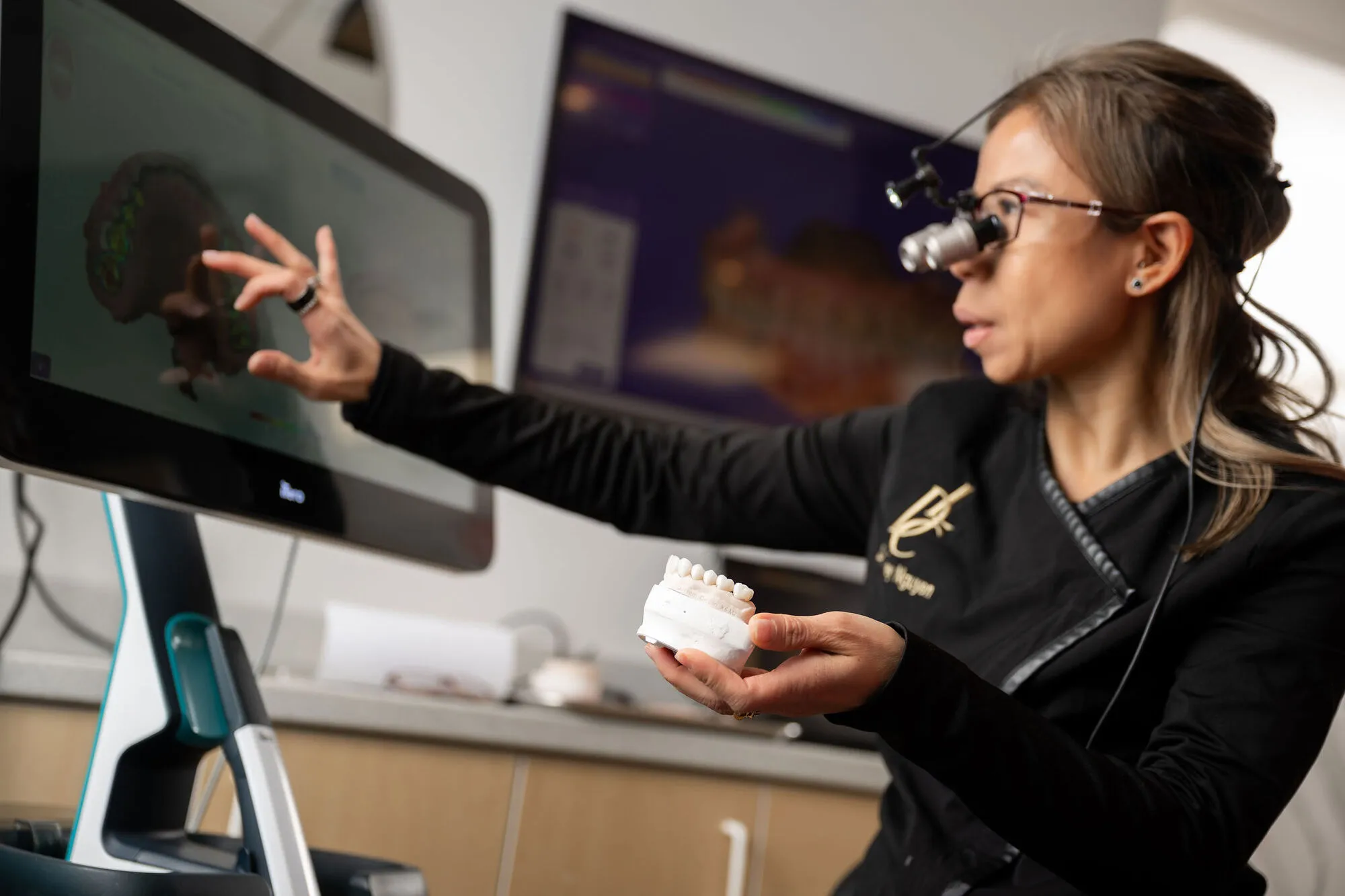
The upper jaw forms part of the floor of the nasal cavity. An overly-simplified way to put it is, “the roof of the mouth is the floor of the nose.” Why does this matter? In some children, a narrow upper jaw may contribute to dental crowding and may be relevant to airway assessment. Nasal congestion, enlarged adenoids or tonsils, allergies, and other factors can also affect breathing. So what do kids do when they can’t breathe through their nose? They open their mouth. Chronic mouth breathing has been associated with certain patterns of facial growth, although the relationship is complex and varies from child to child. Identifying the contributing factors helps determine whether dental treatment, medical evaluation, or coordinated care is appropriate.
While a child is still growing, some jaw and bite concerns can be addressed with approaches that aren’t available later. As skeletal growth slows and finishes, different approaches are generally needed.
Healthy Breathing,
Healthy Growth
Airway Development
Our approach to growth and development
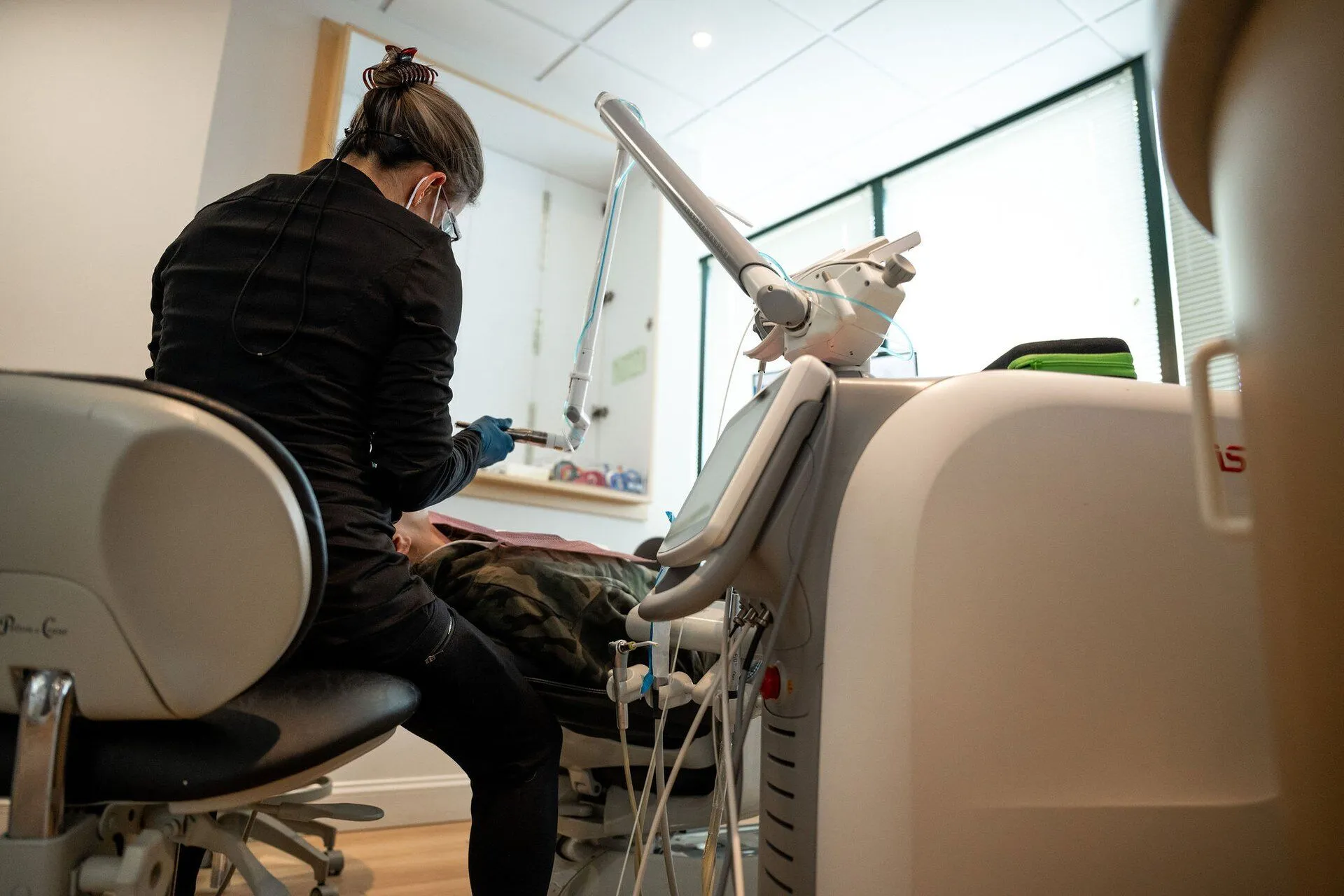
Dr. Tracey looks at the whole child, not just the teeth. During an evaluation, she considers how your child is breathing. Does your child breathe comfortably through the nose? Are there signs of mouth breathing or airway restriction? She also considers sleep. Are there signs of sleep-disordered breathing, such as snoring or restless sleep? Dr. Tracey will look at jaw growth, bite and teeth. Are the upper and lower jaws developing in balance? How are the teeth coming in, and how do they fit together? Is there enough room for the tongue and adult teeth? Lastly, she will evaluate habits and function. Are there habits like thumb sucking, tongue thrusting, or low tongue posture that may influence growth?
Imaging is individualized. When the information would affect your child’s care, we may recommend digital imaging, including 3D CBCT. Our pediatric questionnaire helps us understand your child’s sleep and breathing at home. It’s a screening tool, not a diagnosis. Curious? Take it below.


Airway Development
Gentle, age-appropriate care
If we find that your child’s growth could use some guidance, Dr. Tracey will talk with you about options suited to their age and needs. Depending on the situation, care may include:
- Monitoring growth over time with regular check-ins
- Expansion of the upper jaw when there is a diagnosed skeletal or dental need, such as a narrow upper jaw with crowding
- Orthodontic appliances selected for your child’s specific diagnosis
- Coordination with orthodontists, pediatricians, ENT physicians, sleep physicians, and myofunctional therapists when a team approach is best.
Treatment is recommended for a diagnosed dental or skeletal concern, not simply because a child snores or mouth breathes. Every plan is tailored to your child, and our goal is always the least invasive approach that addresses the problem.
Airway Development
How you can help at home
It’s no surprise to anyone that parents play a big role in healthy development. A few simple habits can make a difference:
- Notice how your child breathes while sleeping, watching TV or reading. If your child can’t comfortably breathe through the nose, let us and your pediatrician know so the cause can be evaluated.
- Listen for snoring or pauses in breathing at night, and mention them at your visit.
- Offer a varied, age-appropriate diet, which supports normal chewing and oral function.
- Let us know about allergies or frequent congestion, since a stuffy nose often leads to mouth breathing.
- Keep regular dental visits in order to track growth over time.
Airway Development
Growth and airway care for teens and adults
As skeletal growth slows and finishes, treatment options change. Care for teens and adults is different from guiding growth in a young child, but there are still options to consider. For selected teens and adults with a narrow upper jaw, MARPE / MSE expansion may be appropriate, depending on skeletal maturity and anatomy. For adults diagnosed with sleep apnea by a physician, Dr. Tracey offers oral appliance therapy and, when needed, coordinates with surgeons. Visit our Airway and Sleep & Breathing pages to learn more.

Meet the Doctor
Why choose Dr. Tracey?
Dr. Tracey is a Diplomate of the American Board of Dental Sleep Medicine and co-founder of the ASAP Pathway, the Airway, Sleep and Pediatric Pathway, an advanced education program that trains dentists nationwide in airway-focused care for children and adults. She brings that same depth of knowledge to the families she cares for at Lansdowne Dental Care.
We also know that dental visits can feel big for little ones. Our team takes time to explain each step in a way children understand, so visits feel calm and positive.
Step by Step
What to expect at your child’s first visit
1
A conversation with you
We’ll talk about your child’s sleep, breathing, health history, and any concerns you’ve noticed at home. Completing our pediatric questionnaire before the visit helps us make the most of our time together. Take the questionnaire now.
2
A gentle exam
Dr. Tracey evaluates your child’s teeth, jaws, bite, airway, and oral habits.
3
Imaging when needed
If more information would help, we may recommend digital imaging.
4
A clear plan
We’ll explain what we found, whether any treatment is recommended now or later, and how we’ll monitor your child’s growth.
Questions
Frequently Asked Questions
What age should my child be evaluated?
Many airway and growth concerns can be identified in early childhood. If you notice snoring, mouth breathing, or crowded teeth, there’s no need to wait. An evaluation can help you understand whether anything needs attention now. If your child snores regularly or you notice pauses in breathing, please also talk with your pediatrician.
Is treatment uncomfortable?
Care for growing children is designed to be gentle. Most children adjust quickly to appliances, and we’ll make sure you both know what to expect.
Will my child still need braces?
Possibly. Early treatment may address specific developing problems and help guide the next stage of care, but your child may still need comprehensive orthodontic treatment later. Dr. Tracey will talk with you about what to expect for your child.
Do you work with other specialists?
Yes. Airway concerns often benefit from a team approach, and we coordinate with your child’s pediatrician, ENT, sleep physician, orthodontist, or myofunctional therapist as needed.

Give your child a healthy foundation
Healthy breathing and sleep set the stage for healthy growth, learning, and confidence. If you’ve noticed any signs of airway or jaw concerns, schedule a virtual consultation with Dr. Tracey to talk through your child’s needs.

Book Your Virtual Consult
Start With
a Conversation
Tell us a little about what you’re experiencing and our team will reach out to schedule your virtual consultation with Dr. Tracey.
Leesburg · Health · Function · Aesthetics · Confidence